
Somatic Therapy in London
Somatic therapy focuses on the body’s role in nervous system regulation.
Protective responses are not just cognitive. They are reflected in muscle tone, posture, breath patterns and movement tendencies. When the nervous system has been under prolonged stress, these patterns can become habitual.
Structured somatic practices can help to restore nervous system flexibility.
Through guided, repeatable exercises, the body is supported to complete stress responses and return to a more relaxed and responsive baseline.
Over time, this work will build your physical capacity for regulation.

Structured Impulse Completion
When a stress response is interrupted or suppressed, the body can remain in a partial state of activation.
Impulse completion practices, informed by Sensorimotor Psychotherapy, help resolve these incomplete defensive patterns.
These are structured exercises, delivered with guidance and intention. They are not expressive movement or free-form release, rather specific sequences designed to restore balance and increase nervous system stability.
Clients often report feeling more grounded, and better able to return to a baseline of relaxation afterwards.
Trauma Release Exercises (TRE)
Trauma Release Exercises support the nervous system through a natural tremoring response.
TRE is offered as a complementary, standalone practice delivered over 2 dedicated sessions. It can be integrated alongside Cognitive Hypnotherapy and other elements of the Breath Body Mind Method.
When learnt safely, TRE can help to release deeply held tension patterns and support autonomic balance and flexibility.
You can read more about Trauma Release Exercises here.
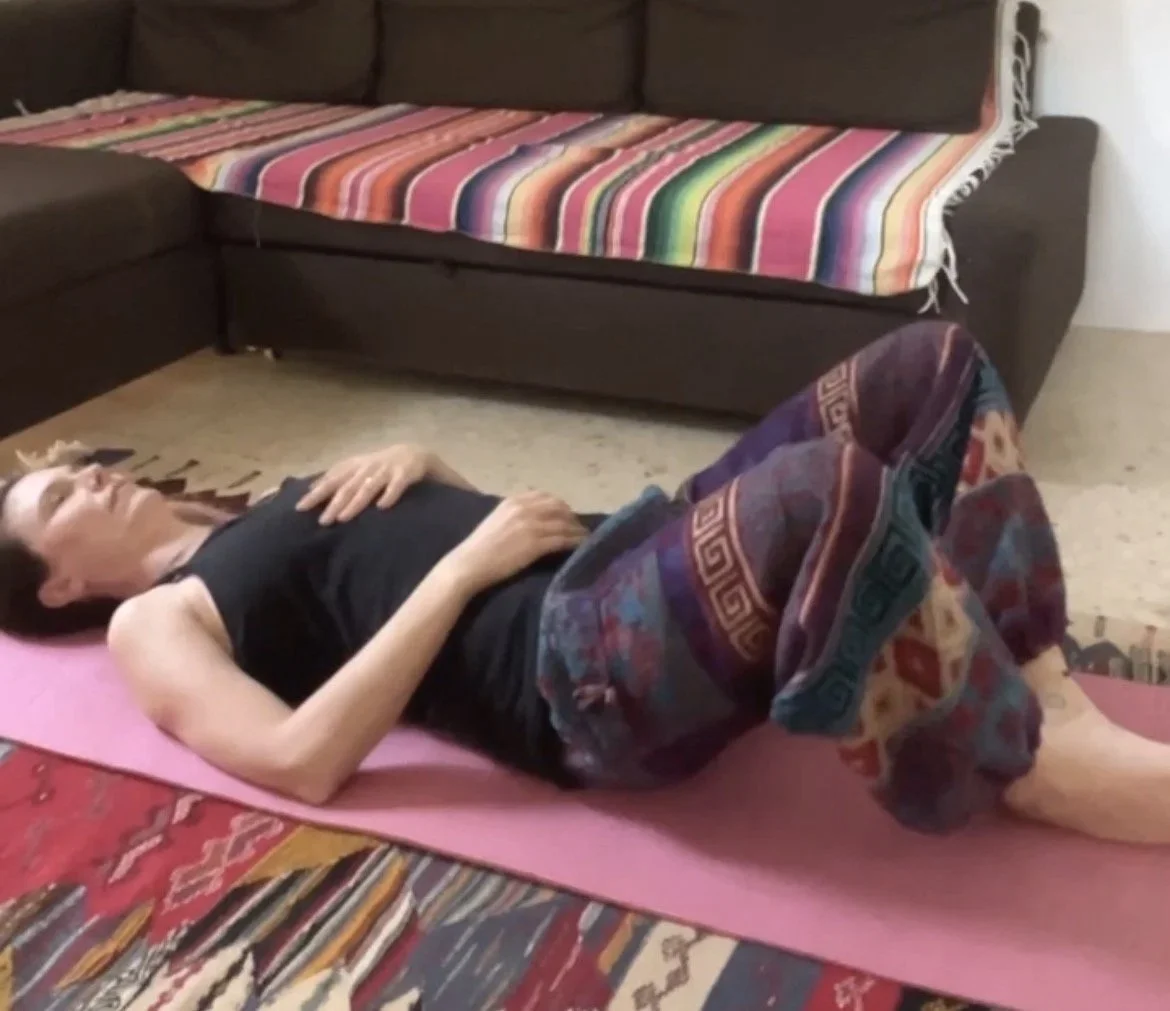
Movement & regulation Sequences
I teach structured movement sequences that are influenced by Qi Gong principles to help support regulation and embodied awareness.
These practices are designed to:
• Improve the mind- body connection
• Support parasympathetic activation
• Increase body awareness
• Build tolerance for sensation
• Expand nervous system capacity
They are practical and repeatable, and often form part of home practice between sessions.
‘I’m finding the somatic moves so helpful to release anger safely”
How somatic therapy fits into The Breath Body Mind Method
Somatic therapy forms one layer of the Breath Body Mind Method, alongside Cognitive Hypnotherapy, breath re-education and nervous system education.
Together, these approaches can support regulation at cognitive, subconscious and physical levels.
-
The word ‘somatic’ simply means ‘of the body’.
Somatic Therapy refers to approaches that work with the connection between the mind, body and nervous system.
Rather than focusing only on thoughts, somatic practices help you become more aware of physical sensations, tension patterns, breathing, posture, movement and nervous system responses.
This can support more agency and understanding of your body, greater regulation, better resilience and a stronger sense of connection with yourself.
-
Anxiety is not only experienced in the mind. It also affects the body through several physiological responses including muscle tension, breathing and heart rate, and nervous system activation.
Somatic approaches help you become aware of these patterns and gradually shift them, helping the body move out of chronic alertness and into a more relaxed and settled state.
-
Trauma often affects the nervous system as much as the conscious mind.
You may notice that even when you understand their experiences intellectually, your body still reacts with tension, hypervigilance, shutdown or overwhelm.
Somatic therapy helps create a greater sense of safety in the body, allowing the nervous system to become less reactive over time.
-
Somatic therapy can help the body feel safe enough to release chronic pain.
Persistent pain is influenced by the nervous system as well as the body itself.
Somatic approaches can help reduce tension, fear and nervous system reactivity, which can support greater comfort, ease and confidence in the body over time.
-
Nervous system regulation refers to the ability to respond to stress and then return to a more balanced state afterwards. It doesn’t mean being calm all the time- more like being able to respond flexibly and appropriately.
When the nervous system becomes stuck in patterns of chronic alertness, shutdown or overwhelm, symptoms such as anxiety, tension, fatigue or pain can persist.
Somatic therapy helps support greater flexibility and resilience within the nervous system.
-
No. TRE is one type of somatic work, there are many more.
TRE (Tension & Trauma Releasing Exercises) is one specific somatic approach that uses gentle exercises to encourage the release of deep tension patterns through neurogenic tremoring.
Somatic therapy is a broader term that can include many different approaches involving body awareness, movement, breathing and other types of nervous system regulation.
-
Yes. The somatic approaches I use work very well in online sessions, including breathing exercises, guided body awareness, impulse completion, Qi Gong grounding practices, nervous system education and TRE.
Online therapy also allows people to learn, engage and practice from the comfort and familiarity of their own home.